
6 min read
The five finger prayer is a simple and structured Christian prayer method that uses your hand as a guide to remember who to pray for. It is often taught to children, but many adults rely on it because it keeps prayer focused, balanced, and intentional. When words feel difficult or overwhelming, this method provides gentle direction without removing personal expression.
Instead of wondering what to say next, you simply move from finger to finger. The five finger prayer helps believers pray for others before themselves, creating a rhythm of gratitude, intercession, and trust. Whether used at bedtime, in classrooms, during family devotion, or in quiet personal moments, this method has helped many Christians grow consistent in prayer.
What Is the Five Finger Prayer?
The five finger prayer connects each finger of your hand to a specific group of people or prayer focus. As you look at your hand, each finger reminds you of someone to pray for. This visual structure makes prayer easier to remember and practice daily.
The method became widely known through Pope Francis, who shared it as a simple way for children to learn prayer. However, Christians across many denominations now use it. If you are newer to prayer, you may find it helpful to understand what prayer is and why it matters before applying structured methods like this.
How the Five Finger Prayer Works (Step-by-Step)
- Thumb: Pray for those closest to you — family, friends, and loved ones.
- Index Finger: Pray for teachers, pastors, mentors, and those who guide others.
- Middle Finger: Pray for leaders, government officials, and those in authority.
- Ring Finger: Pray for the sick, weak, struggling, and those in need.
- Pinky Finger: Pray for your own needs and spiritual growth.
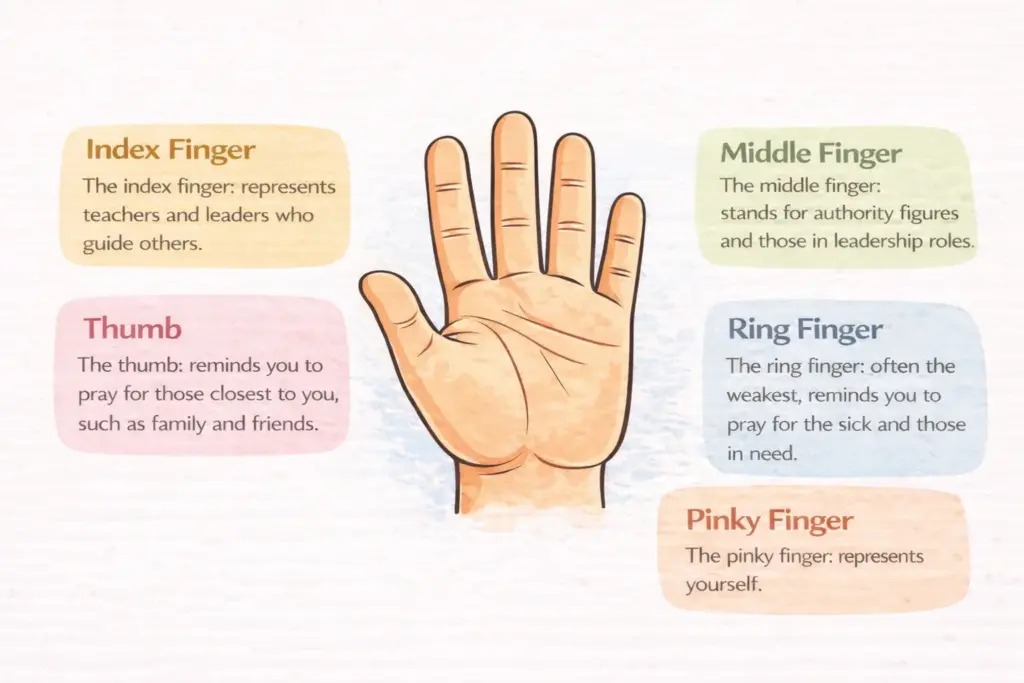
This structure encourages balance. Instead of focusing only on personal concerns, you intentionally pray outward before inward. That shift strengthens humility and compassion.
The Meaning Behind Each Finger (Biblical Insight)
Thumb – Those Closest to You
The thumb is closest to your body, which reminds you to begin by praying for those closest to your heart. Scripture teaches believers to encourage and strengthen one another. In 1 Thessalonians 5:11, Paul urges Christians to build each other up. Praying for loved ones reinforces unity, protection, and gratitude.
Index Finger – Those Who Guide
The index finger points and directs. It reminds us of teachers, pastors, counselors, and mentors. These individuals carry responsibility and influence. Proverbs 11:14 explains that wise counsel brings safety. When we pray for those who guide others, we ask God to give them wisdom and clarity.
Middle Finger – Authority and Leadership
The tallest finger represents those who hold positions of authority. Leaders make decisions that impact many lives. The Bible instructs believers to respect and pray for governing authorities in Romans 13:1. Even when opinions differ, prayer invites God’s guidance over leadership.
Ring Finger – The Weak and Vulnerable
The ring finger is considered the weakest finger. It reminds us to pray for the sick, grieving, lonely, and oppressed. In James 5:14, believers are instructed to pray for the sick and anoint them. This finger calls us to compassion and intercession.
Pinky Finger – Yourself
The smallest finger reminds you to pray for yourself last. After lifting others before God, you bring your own needs with perspective. Philippians 4:6 encourages believers not to be anxious but to present requests to God with thanksgiving. Praying for yourself is not selfish — it is surrender.
Five Finger Prayer for Children
Children learn best with visual tools. The five finger prayer gives them a physical reminder they always carry with them. Parents and teachers often use it at bedtime, before meals, or during classroom devotions.
Because the method is simple and repetitive, it builds confidence in children who may feel unsure how to pray. It also encourages empathy by teaching them to pray beyond their own needs.
Families who practice daily prayer routines may also find encouragement in simple Christian prayers for everyday life.
Pope Francis and the Five Finger Prayer
Pope Francis helped popularize the five finger prayer as a teaching tool for children. His explanation emphasized starting with loved ones and ending with personal needs. While strongly associated with Catholic teaching, the structure itself reflects biblical principles embraced by many Christian traditions.
The method’s simplicity is what makes it powerful. It removes complexity and invites sincerity.
Is the Five Finger Prayer Biblical?
The Bible does not specifically outline this method. However, the structure aligns fully with biblical instruction. Christians are repeatedly encouraged to pray for family, leaders, the sick, and themselves.
You can explore more about this topic in The Power of Prayer, which explains how prayer shapes faith and strengthens trust in God.
Printable Five Finger Prayer Guide
Many families create printable versions of the five finger prayer and keep them in Bibles, classrooms, or on refrigerators. Writing the five reminders on a card makes it easier for children and adults to practice consistently.
A printable version may include:
- Thumb – Pray for family and friends
- Index – Pray for teachers and pastors
- Middle – Pray for leaders
- Ring – Pray for the sick and hurting
- Pinky – Pray for yourself
This visual tool reinforces daily habit and makes prayer accessible.
Frequently Asked Questions
Who created the five finger prayer?
The method existed in various forms, but it became widely known through Pope Francis as a teaching tool for children.
Can adults use the five finger prayer?
Yes. Many adults use it to structure daily devotion and maintain balanced intercession.
Is the five finger prayer only for Catholics?
No. Christians across denominations use it because it reflects biblical teaching on intercessory prayer.
How long does the five finger prayer take?
It can take as little as two minutes or as long as you choose. The structure is flexible.
Try the Five Finger Prayer Today
Hold up your hand. Slowly move from thumb to pinky. Pause with each finger. Think of specific names. Pray intentionally and calmly. If you need help finding words, consider reading a short prayer for someone you love and adapting it for each group.
The five finger prayer reminds us that prayer does not need to be complicated or lengthy to be meaningful. It builds habit, compassion, and spiritual focus. Over time, this simple structure can deepen faith and strengthen your daily walk with God.
Growing Deeper Through Simple Prayer Methods
Consistency builds spiritual maturity. Tools like the five finger prayer reduce hesitation and encourage daily connection with God. Structured prayer is not about limitation — it is about focus. By praying intentionally for others first, believers grow in humility and awareness.
Prayer becomes less about perfect words and more about faithful practice. When repeated daily, even simple methods shape perspective, reduce anxiety, and increase gratitude.
The five finger prayer stands as a reminder that something as ordinary as your hand can become a powerful guide toward a deeper relationship with God.
A prayer journal is a simple, beautiful way to record your prayers and remember how God answers them.